
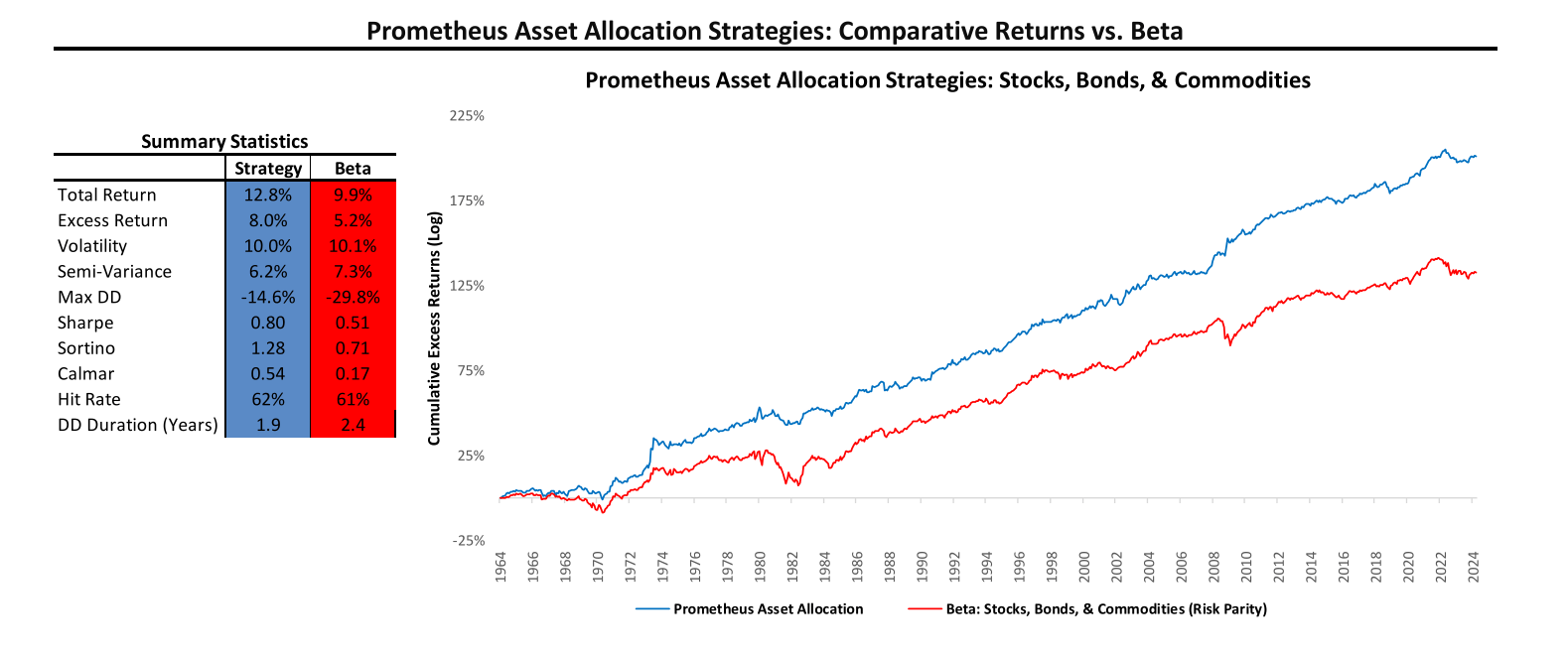
The Prometheus Asset Allocation program offers a stable, macro-focused approach to asset management. Prometheus Asset Allocation aims to outperform a traditional stock and bond portfolio by leveraging our proprietary systematic macro process to rotate between 3 ETFs monthly (plus cash).
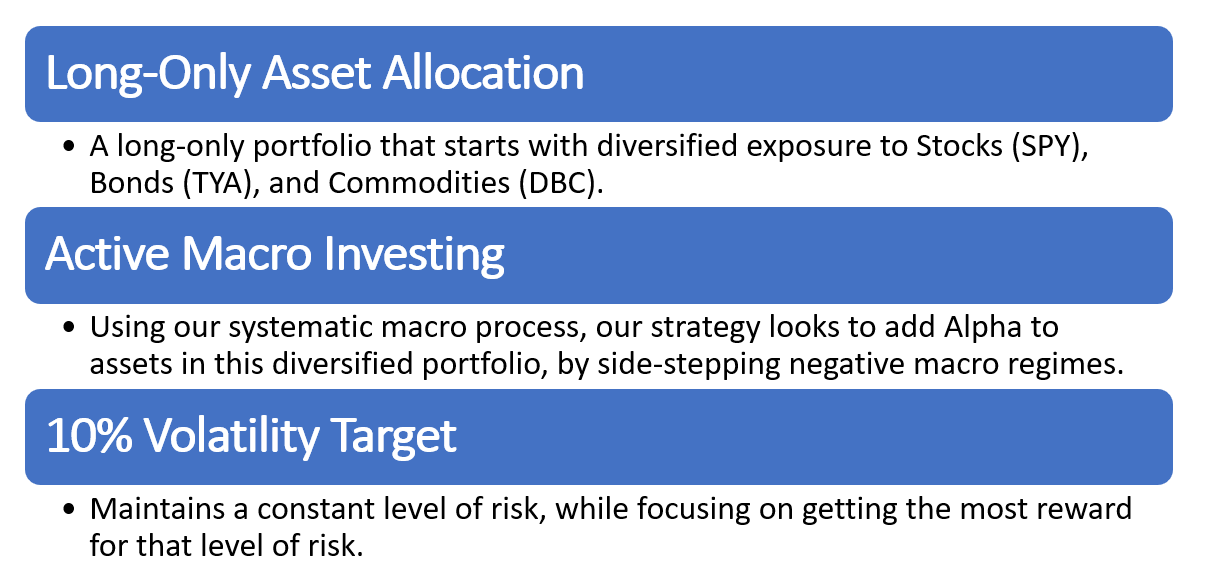
This strategy starts by diversifying the asset base with commodities and TYA, a higher volatility version of 10-year treasuries, ensuring performance across various economic conditions including expansions, recessions, and inflationary periods.
Our systematic macro process then guides the timing of entry and exit for asset exposures, optimizing our holdings to capitalize on favourable economic times and avoid downturns. We strategically invest in equities during expansions, bonds during economic slowdowns, and commodities during stagflations, employing a proprietary approach to determine these regimes.
Additionally, we maintain a targeted 10% volatility, mirroring the risk level of a traditional 60/40 portfolio while protecting against significant losses. Further, 10% is a level of risk where any losses incurred are never so large that they run the risk of ruin. 10% is also largely consistent with the volatility of a 60/40 stock and bond portfolio.
Asset Allocation updates are sent out on the first business day of every month in the form of a video, along with the accompanying slide-deck.
17 thoughts on “Prometheus Asset Allocation – July 2024”
Howdy! Do you know if they make any plugins to help with SEO?
I’m trying to get my website to rank for some targeted keywords but I’m not seeing very good results.
If you know of any please share. Thanks! I saw similar text here: Warm
blankets
Their commitment to international standards is evident.
order lisinopril for sale
I’m impressed with their commitment to customer care.
Their online prescription system is so efficient.
gabapentin powder solubility
They’re globally connected, ensuring the best patient care.
Trustworthy and efficient with every international delivery.
where can i get clomid pills
Bridging continents with their top-notch service.
Their worldwide pharmacists’ consultations are invaluable.
order gabapentin online usa
A place where customer health is the top priority.
can you get cheap clomiphene pills can you get clomid online order cheap clomiphene pill how to buy cheap clomiphene tablets can i buy clomiphene tablets can you get generic clomiphene prices how can i get clomid price
I couldn’t resist commenting. Warmly written!
order azithromycin pill – cheap tinidazole 300mg metronidazole pills
order generic semaglutide – cyproheptadine online order periactin for sale online
motilium 10mg without prescription – cyclobenzaprine 15mg generic flexeril 15mg pills
order inderal 10mg online cheap – cost inderal buy methotrexate 5mg
cheap amoxil – combivent 100 mcg oral ipratropium 100 mcg price
hgh kur kaufen
Furthermore, macrophage activation by MTII led to a rise in cAMP accumulation, which was attenuated by SHU9119, whereas KPV failed to extend cAMP.
The anti-inflammatory properties of KPV were additionally evident in IL-1β-induced peritonitis inflammation and
in mice with a nonfunctional MC1-R (recessive yellow e/e mice).
KPV is a tripeptide (i.e. 3 amino acids long)
that makes up the C-terminal finish of a larger naturally
occurring melanocortin peptide hormone in your physique known as alpha-melanocyte-stimulating hormone (α-MSH).
KPV exerts its anti-inflammatory function inside cells,
the place it inactivates inflammatory pathways (Xiao
B, 2017). KPV enters the cell and interacts instantly with inflammatory signalling
molecules contained in the cell (Land, 2012). It enters the nucleus of the cell and, once there, can inhibit the interaction of
inflammatory substances and molecules (Land, 2012). In abstract, more targeted analysis
is required to grasp the potential unwanted aspect effects of KPV peptide.
When you are given the “OK,” you can add a cup
of brewed espresso with a splash of additive-free coconut or almond
milk. Patients at first because it is a excessive FODMAP
food in additional than tiny quantities, which means that it could cause G.I.
Reintroducing food is type of personalized, so don’t
strive to do this without medical or dietary steering.
Consuming the incorrect foods will provoke signs, even when you comply with the correct treatment regimen, which
I’ll talk about later. Now that we’ve coated the entire issues that may trigger a leaky intestine let’s speak about the method to repair that gut and the steps we take
in practical medication to place your Ulcerative colitis in everlasting remission.
In one examine of KPV utilizing a mouse ulcerative colitis mannequin, KPV significantly
decreased inflammation within the colon by inhibiting proinflammatory cytokine (molecule) synthesis and secretion [5].
KPV peptide’s anti-inflammatory effects are particularly notable, as a outcome of
the fact that it immediately influences
processes contained in the cell. The small molecular size
of KPV and α-MSH allows them to enter the cell and work
together with inflammatory signaling molecules.
Comparable doses of FK506 and NPs had been administered throughout
acute and persistent irritation. The security of NPs was assessed utilizing histological evaluation of the main organs, which showed no
indications of toxicity after three cycles of tail vein administration (Supplementary Figures S10, S11).
Our preliminary information point out that NPs exhibit good biocompatibility and are
appropriate for in vivo application. After
three therapy cycles, the DAI score, weight reduction, colon size, spleen index, H&E staining, and survival fee had been used to evaluate the severity of mouse colitis and the
therapeutic effect of NPs. Macrophages and T lymphocyte are involved in the immune processes of IBD, which
secrete a lot of inflammatory factors when activated (Khor et al.,
2011; Nakase et al., 2022). In addition, FK506, as an immunosuppressive agent, can inhibit the proliferation and activation of immune cells.
Therefore, we hypothesized that NPs may reduce irritation by lowering macrophage and
T lymphocyte infiltration.
KPV also exerts its antimicrobial properties thus protecting the
physique from opportunistic infections. It modulates collagen deposition and thus is ready
to reduce scarring whereas dashing up the process of wound healing.
In the latest research, researchers engineered nanoparticles to move the anti-inflammatory tripeptide KPV into the colon to gauge its therapeutic efficacy in treating
colitis in mice. Each in vitro and in vivo experiments showed
that NP-KPV decreased inflammatory responses
and shielded mice from inflammatory and histological parameters.
These outcomes recommend that NPs could function a drug supply system that can overcome physiological
limitations and deliver anti-inflammatory agents, similar to KPV, to inflammatory areas.
As a novel nanodrug with PepT1-targeting capacity, the self-assembled NPs significantly alleviated murine acute and chronic colitis signs.
But typically, the physique overreacts—and that leads to persistent issues
like eczema, psoriasis, or gut issues. You’ve in all probability never heard of KPV earlier than, but it’s truly
a tiny thing manufactured from simply three building blocks together with lysine,
proline, and valine. It’s a small piece taken from something much greater
within the body, a hormone known as alpha-MSH.
They examined how nicely these peptides could battle germs, and the outcomes had
been quite promising. This process wants many various skin cells to work together—like keratinocytes (skin builders), fibroblasts (collagen makers), and even immune cells.
What makes KPV peptide so attention-grabbing is the method it interacts with these cells to assist healing occur quicker, cleaner, and with less scarring.
Furthermore, its anti-inflammatory, anti-cancer, and wound-healing properties
take it a step additional in its role of protecting the body from damage
which additionally makes it extra efficacious.
These peptides speed up wound therapeutic
by selling the event of tissue fibers and blood vessels.
Apart from its immunomodulatory features, LL-37 can also act as a potent anti-inflammatory peptide and protect the body from inflammatory harm by activating anti-inflammatory cytokines.
KPV must be used with warning in research, and there are particular contraindications to focus on.
Both these peptides are strong immunomodulators and due to this fact reinforce the immune
system of the body. Though LL-37 peptide advantages are many, direct unwanted effects
of LL-37 have also not been sufficiently reported within the
literature, which might be as a end result of a lack of enough analysis on human topics.
Time to dig into a variety of the person evaluations and see what people need to say in regards to the antimicrobial exercise of this peptide.
pre hormone supplements
Sermone-derived peptides have become a cornerstone
for those seeking to improve growth hormone secretion without the drawbacks of direct GH injections.
Among the most popular options are Sermorelin, Ipamorelin and Tesamorelin.
Each peptide has its own profile in terms of potency,
safety, administration route, and clinical applications.
Below you will find an in-depth comparison that covers
how each peptide works, their benefits and drawbacks, dosage guidelines,
side-effects, cost considerations and real-world patient experiences.
Table of Contents
Overview of Growth Hormone Release Peptides
Sermorelin – What It Is and How It Works
Ipamorelin – The New-Generation GH Secretagogue
Tesamorelin – A Focus on Visceral Fat Reduction
Sermorelin vs Ipamorelin – Which Peptide Therapy is Best?
Side Effects and Safety Profiles
Dosage, Administration and Lifestyle Tips
Cost Comparison and Insurance Coverage
Real-World Patient Stories
Conclusion and Final Thoughts
Overview of Growth Hormone Release Peptides
Growth hormone release peptides are short chains of amino acids that mimic natural growth hormone releasing hormones (GHRH) or ghrelin. They stimulate the pituitary
gland to produce more endogenous GH, which in turn triggers insulin-like growth factor 1 (IGF-1) production in the liver and other tissues.
The main benefits include increased lean muscle mass, improved skin elasticity,
enhanced recovery, better sleep quality, and reduced body fat.
Sermorelin – What It Is and How It Works
Sermorelin is a synthetic analog of growth hormone releasing
hormone (GHRH). It consists of 24 amino acids that are structurally similar to the natural peptide but with modifications that increase its stability in the bloodstream.
When injected, sermorelin binds to GHRH receptors on pituitary somatotrophs and triggers the release of GH in a pulsatile manner that mimics
the body’s normal circadian rhythm. Because it relies on the
body’s own machinery, the risk of supraphysiologic GH levels is low.
Key points:
23-day half-life allows for once-daily dosing.
Typically administered at night to take advantage of natural sleep-related GH surges.
Ideal for patients who want a “natural” approach without direct GH injections.
Ipamorelin – The New-Generation GH Secretagogue
Ipamorelin is a hexapeptide that acts as
a ghrelin receptor agonist, specifically stimulating the growth hormone secretagogue receptor 2 (GHSR-2).
It has high selectivity for GH release while producing minimal stimulation of cortisol or prolactin. Its short half-life (less than an hour) necessitates multiple daily injections if continuous secretion is desired.
Key points:
Extremely selective; minimal side-effects on other endocrine axes.
Can be combined with other peptides like CJC-1295 for synergistic effects.
Often used in bodybuilding or anti-aging protocols where rapid GH
peaks are desired.
Tesamorelin – A Focus on Visceral Fat Reduction
Tesamorelin is a recombinant form of human GHRH that has been approved by the
FDA for treating excess abdominal fat in HIV patients
with lipodystrophy. It works similarly to sermone-derived
peptides but has a slightly longer half-life (about 4 hours) and can be administered once daily.
Key points:
Best suited for patients with visceral adiposity or metabolic syndrome.
Proven to reduce waist circumference by about 2–3 cm in clinical trials.
Requires regular monitoring of IGF-1 levels due to potential for higher GH
exposure.
Sermorelin vs Ipamorelin – Which Peptide Therapy is
Best?
When choosing between sermone and ipamorelin, the decision largely
depends on patient goals, lifestyle, and tolerance for injections.
Sermorelin advantages:
Once-daily injection reduces needle burden.
Mimics natural GH pulsatility; lower risk of side-effects like joint pain or
fluid retention.
Ideal for aging individuals looking to preserve muscle
mass and improve sleep quality.
Ipamorelin advantages:
Very selective for GH with minimal hormonal cross-talk.
Can be used in combination therapies to boost IGF-1 levels
dramatically.
Short half-life allows flexible dosing schedules, useful for athletes who want rapid
peaks after workouts.
In summary, sermone is the best choice for long-term maintenance and natural rhythm; ipamorelin excels
when a patient wants more potent, targeted GH release with minimal endocrine side-effects.
Side Effects and Safety Profiles
Common side effects across all peptides: mild injection site pain, occasional headache, transient
water retention or swelling in extremities. More serious risks include hypoglycemia (especially if used
by diabetics), increased risk of tumor growth in patients with a history of cancer, and potential for thyroid
hormone changes.
Sermorelin – low incidence of adverse events due to its physiological mimicry.
Ipamorelin – very low risk of cortisol or prolactin elevation; occasional mild joint stiffness reported.
Tesamorelin – slightly higher IGF-1 levels can lead to more pronounced fluid retention, but still well tolerated.
Dosage, Administration and Lifestyle Tips
Sermorelin: 0.2 mg (0.5 mL) injected subcutaneously once daily at bedtime.
Ipamorelin: 100–200 µg per injection; typically administered twice daily (morning and evening).
Tesamorelin: 1.5 mg once daily, preferably in the morning.
Lifestyle tips:
Maintain a consistent sleep schedule to maximize GH pulsatility.
Pair peptides with protein-rich meals or BCAAs for muscle anabolism.
Monitor IGF-1 levels every 4–6 weeks to avoid over-exposure.
Cost Comparison and Insurance Coverage
Sermorelin – $350–$500 per month, often not
covered by insurance as it is considered a cosmetic therapy.
Ipamorelin – $400–$600 per month; some clinics offer discount packages for long-term users.
Tesamorelin – $700–$900 per month; may be partially covered under
certain insurance plans if used for HIV lipodystrophy.
Real-World Patient Stories
Patient A (60-year-old retiree) switched to sermone and reported improved energy, better sleep, and a 5% reduction in body fat after six months.
Patient B (35-year-old athlete) used ipamorelin for 12 weeks and noted increased muscle hardness and
a 3% gain in lean mass.
Patient C (45-year-old with metabolic syndrome) on tesamorelin saw a significant drop in waist circumference and improved insulin sensitivity after
eight months.
Conclusion and Final Thoughts
Choosing the right peptide therapy hinges on individual goals,
tolerance for injections, and budget constraints. Sermone offers a natural, once-daily regimen that
aligns well with aging bodies seeking gentle restoration of GH
rhythms. Ipamorelin delivers potent, selective stimulation ideal for
those who need quick peaks or wish to combine it with other agents.
Tesamorelin remains the gold standard for visceral fat reduction in specific patient populations.
All three peptides are generally safe when used responsibly, but regular monitoring and adherence to recommended dosing schedules are
essential for optimal outcomes.
men’s muscle wrestling